

Metabolism Day 2026
A conference about energy control and metabolism
On March 10, 2026, Metabolism Day will bring together researchers within the field of metabolism to discuss the latest science in cardiometabolic diseases and energy control. It is hosted and organized by the Novo Nordisk Foundation Center for Basic Metabolic Research (CBMR) at the University of Copenhagen.
Speakers
Read more about the speakers and their talks below.
Talk title: 'Adipogenic Hits on Kids - Early drivers of progressive obesity and adipose tissue dysfunction in children'
 Antje Körner is a pediatrician scientist, appointed Professor of Metabolic Research at Leipzig University and head of Childhood Obesity and Metabolic Research at the Helmholtz Institute for Metabolic, Obesity and Vascular Research (HI-MAG) of the Helmholtz Munich at Leipzig University (since 2023).
She is a pediatrician with subspecialization in pediatric endocrinology. She is heading the Pediatric Research Unit of the Children’s Hospital of Leipzig University and was appointed Professor of Pediatric Research (2010, tenured 2016) at Leipzig University.
Her research focuses on the origin, mechanisms and consequences of childhood obesity following a holistic translational approach integrating experimental science, epidemiologic, genetic, and clinical approaches with the aim to develop successful and timely diagnosis, treatment and prevention. Her research interests are the origin of childhood obesity and ensuing complications, the mechanisms leading to obesity and complications, with a focus on adipose tissue biology, the genetic background of obesity including the functional genetics, and novel treatment approaches. With her team she has established unique childhood cohorts including an adipose tissue cohort (n>700), childhood obesity cohort (n>2500) and populational childhood cohorts (n>6000)
Antje Körner´s scientific achievements include the identification of early childhood as critical window for development of sustained obesity, rethinking risk definition and prediction of future dysglycemia applying new parameters and identification of a new monogenic obesity trait. Antje Körner is member of the board of directors of the German Center of Child and Adolescent Health (DZKJ) and Co-Chair of the prestigious Excellence Cluster Leipzig Center of Metabolism (LeiCeM).
She published >250 original articles and received numerous national and international awards (e.g. Obesity Prize for Excellence, EASO-NNF; Research Award of the German Diabetes Society and European Society of Paediatric Endocrinology). She has raised >11 Mio € competitive research grants, incl. EU, DFG, BMBF.
It is her ambition to foster pediatric research on early origins of common diseases in childhood in general, and in particular to overcome the treatment gap in pediatric obesity through risk-profiling and understanding of mechanisms.
Talk title: 'Decoding human cell architecture – from spatial proteomics to cell modeling'
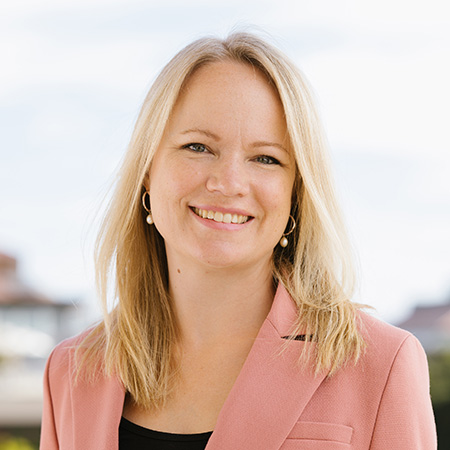 Dr. Lundberg is Associate Professor of Bioengineering and Pathology at Stanford University, and Director of the Subcellular Atlas, of the Human Protein Atlas program in Sweden. In the interface between bioimaging, proteomics and artificial intelligence her research aims to measure and model the spatiotemporal subcellular architecture of the human proteome. The aim of her research is to understand how the cell spatially reorganizes its proteins to modulate cellular function and how mislocalization of proteins may give rise to disease.
Talk title: 'Cross-species genetic mapping of targets in aging and metabolism'
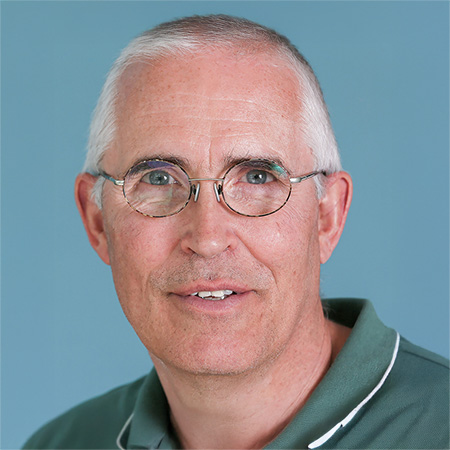
Johan Auwerx is Professor at the Ecole Polytechnique Fédérale de Lausanne, Switzerland. He is using systems biology and genetics approaches to understand the role of mitochondria in health, disease, and aging. His work is relevant for the areas of genetics, systems biology, metabolism, muscle biology, and aging.
His research spurred the development of new drugs, such as PPAR agonists, urolithin A, PARP inhibitors and other NAD boosters for the treatment of metabolic, cardio-vascular, renal, and neuromuscular
diseases.
Johan Auwerx was elected as a member of EMBO in 2003 and has received many international scientific prizes, including the prestigious Marcel Benoist prize. He is the founder of several biotech companies.
Talk title: 'The gut in literature: what can fiction offer metabolism researchers?'
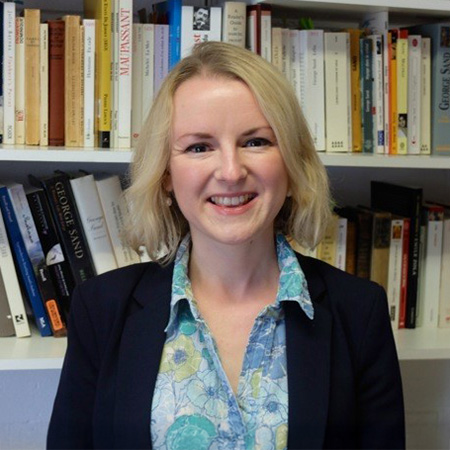
Manon Mathias is Reader in French at the University of Glasgow where she is Co-Director of the Medical Humanities Research Centre. Her research focuses on the medical humanities in relation to literature and health; cultural history; and the nineteenth-century novel. She has recently worked on gut health and preventative medicine in the nineteenth century.
Her current project investigates caesarean birth in French and English fiction from the 1790s to the present. She is the author of two monographs, Gut, Brain, and Environment in Nineteenth Century French Literature and Medicine (Routledge, 2024) and Vision in the Novels of George Sand (OUP, 2016), and co-editor of Gut Feeling and Digestive Health in Nineteenth-Century Literature, History and Culture (Palgrave: 2018).
Talk title: 'Dual and Triple Co-agonists: From Discovery to Best-In-Class'
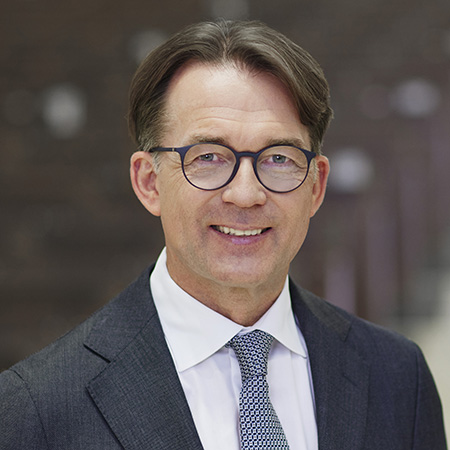 Matthias Tschöp trained at Ludwig-Maximilians-Universität München, Germany. After completing a research fellowship at Eli Lilly (Indianapolis, USA, 1999–2002), he established his own laboratory at the German Institute of Human Nutrition in Potsdam (2002–2003). At the University of Cincinnati (USA, 2003–2011), he advanced to Research Director and Endowed Chair of Medicine. He was then jointly recruited back to Germany by Helmholtz Munich and the Technical University of Munich, where he held an Alexander von Humboldt Professorship until 2025. He served as CEO of Helmholtz Munich (2018–2025) and as Vice President of the Helmholtz Association (2023–2024).
His seminal discoveries leading to highly effective drugs for human obesity have been recognized with multiple awards, including an ERC Advanced Grant, the Banting Medal, the Heinrich Wieland Prize, the Ernst Schering Prize and the Rolf Luft Award. Matthias Tschöp now serves as President of Ludwig-Maximilians-Universität München.
Talk title: 'Identification of two types of MASLD with different clinical trajectories'
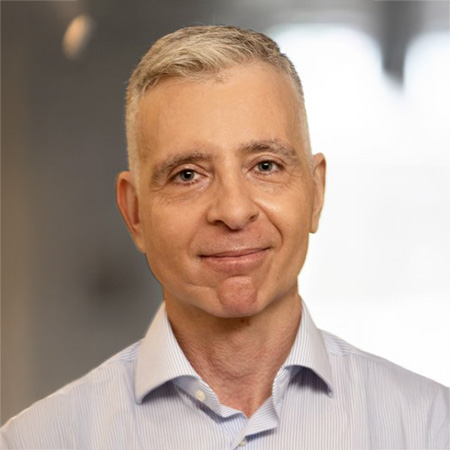
Stefano Romeo is a clinician–scientist at Karolinska Institutet whose work bridges human genetics, metabolism, and liver disease. His research focuses on the genetic architecture of steatotic liver disease and its cardiometabolic consequences, integrating population genetics, molecular biology, and translational approaches.
He has contributed to the identification and characterization of key liver-fat– associated variants, including PNPLA3, MBOAT7, and other loci linked to disease progression, fibrosis, and metabolic dysfunction. His group combines large-scale genomic analyses with mechanistic studies to clarify how inherited factors shape liver fat accumulation, inflammation, and downstream complications. His work aims to translate genetic discoveries into improved risk stratification and targeted interventions for metabolic and liver-related conditions.
Talk title: 'How do the properties of human adipose tissue influence the adverse metabolic consequences of over-nutrition?'
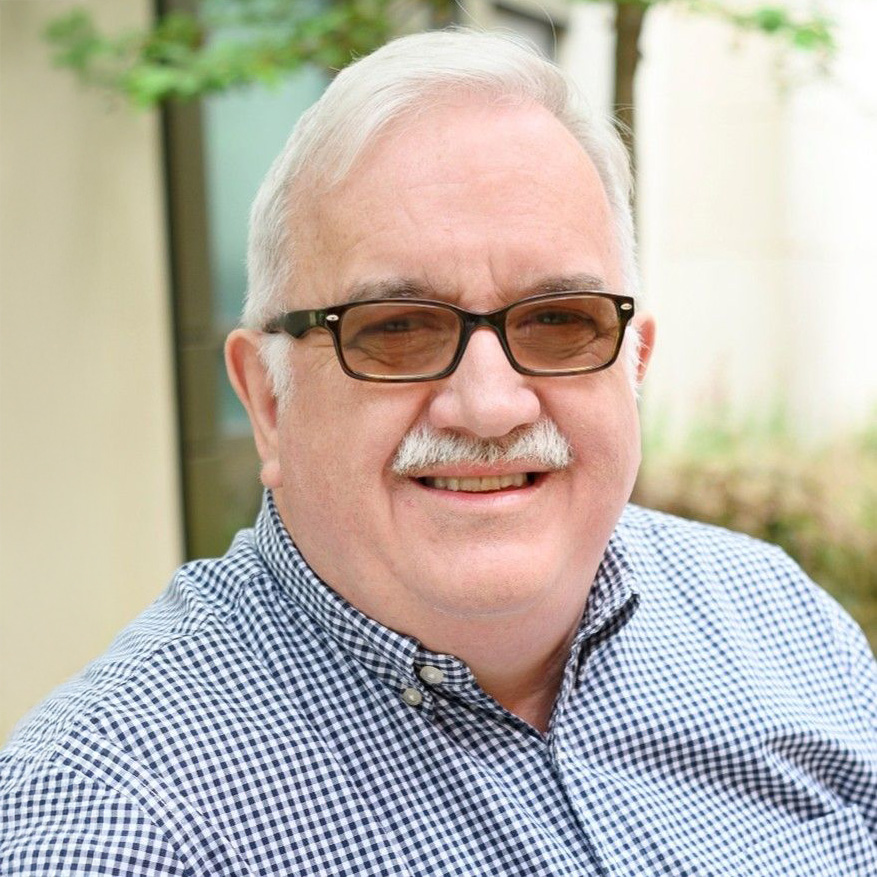
Professor Sir Stephen O'Rahilly MD FRS FMedSci is Professor of Clinical Biochemistry and Medicine at the University of Cambridge, Director of the MRC Metabolic Diseases Unit, an Honorary Consultant Physician at Addenbrookes Hospital and a Fellow of Pembroke College. He played a leading role in the establishment of the Institute of Metabolic Science (IMS) at the University of Cambridge and was its founding co-Director.
He was born and educated in Dublin, Ireland (MB1981, MD 1987) and undertook post graduate training in endocrinology in London, Oxford and Boston MA before starting his independent laboratory at the University of Cambridge in 1991. He researches the aetiology and pathophysiology of human metabolic and endocrine disorders and how such information might be used to improve the diagnosis, therapy and prevention of these diseases.
Time & Date
Tuesday, March 10, 2026
Conference: 08:30 – 17:30
Dinner: 17:30 – 18:30
Venue
Jerne Auditorium
Floor 1, Maersk Tower
The Faculty of Health and Medical Sciences, University of Copenhagen
Blegdamsvej 3B
2200 Copenhagen
Denmark
Contact
If you have any questions regarding the conference, you can contact the organizers at cbmr@sund.ku.dk.
Abstract & Poster Submission
Read more about the abstract and poster requirements here.