
Professor Oliver Rando set to join CBMR on prestigious ERC grant
Professor Rando's research asks how ancestral experiences are epigenetically transmitted to future generations.
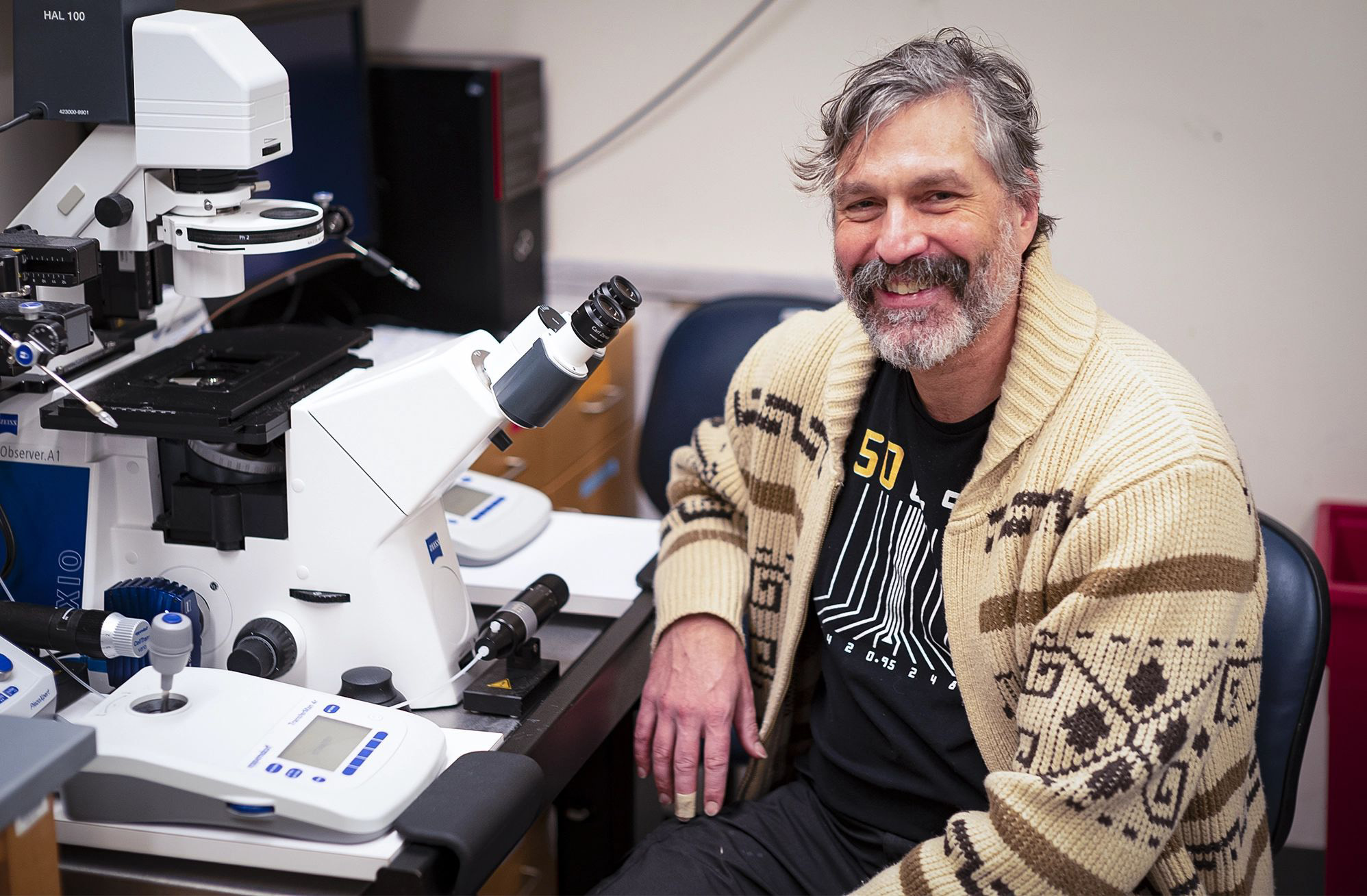
We are happy to announce that Professor Oliver Rando from UMass Chan Medical School was successful in getting an ERC Advanced Grant in the 2025 call, with CBMR as host.
His research focuses on how ancestral experiences are epigenetically transmitted to future generations. His ERC Advanced Grant project, ‘EpiSignal - Biogenesis and function of the mammalian sperm epigenome’, will explore how sperm “choose” which information to pass on, and what it does in an embryo. A better understanding of these processes could explain how a father’s health before conception shapes his offspring’s future health, with implications for nutrition, fertility, and prevention of cardiometabolic diseases.
Read more about it below.
It is increasingly apparent that ancestral environmental conditions can affect phenotypes of future generations. A great deal of evidence shows that parental exposures – from social defeat to dietary stresses – can have significant effects on metabolism and behavior in children. In rodents, we and others have shown that paternal exposures can affect offspring physiology, and male germline effects have been reported in humans as well. That said, despite a large and growing literature documenting various exposure effects on the sperm epigenome, the mechanistic basis by which paternal experiences are transmitted to the next generation remains unclear.
Here, we seek first to address the question of how paternal experiences control the molecular contents of sperm. Answering this mystery is essential for understanding why some exposures impact offspring traits, while others do not. In other words, we seek to define the tissues responsible for “choosing” environmental conditions – presumably those with predictive value regarding future environments – about which to inform offspring. We interrogate a novel genetic effects system for intercellular control of the small RNA payload in sperm (1.1), and develop specific ligand-receptor perturbations to enable genetic dissection of the role of nutrient signalling in modulating the sperm epigenome (1.2). Second, we propose to define the functions of the sperm epigenome in control of early development. Sperm carry an unusual small RNA payload comprised primarily of tRNA halves, an emerging but understudied class of regulatory RNAs. We will systematically identify the proteins and RNAs that interact with tRNA fragments in culture systems (2.1), and manipulate tRNA fragments in embryos to determine their functions in early development (2.2).
Throughout these aims we leverage our expertise in systems biology, genomics, reproductive biology, and embryology to identify the molecular basis for paternal effects on future generations.
We look forward to welcoming him to CBMR in 2027.