
“The signaling role of adipose tissue is central to understanding cardiometabolic health”
From chance encounters to breakthrough discoveries in brown fat biology, Camilla Schéele's research journey exemplifies how scientific careers can pivot on unexpected opportunities. Over the past decade at CBMR, she has built a research program that explores the complex signaling networks of adipose tissue – work that has earned her promotion to Professor of Adipose Tissue Biology and Cardiometabolic Health
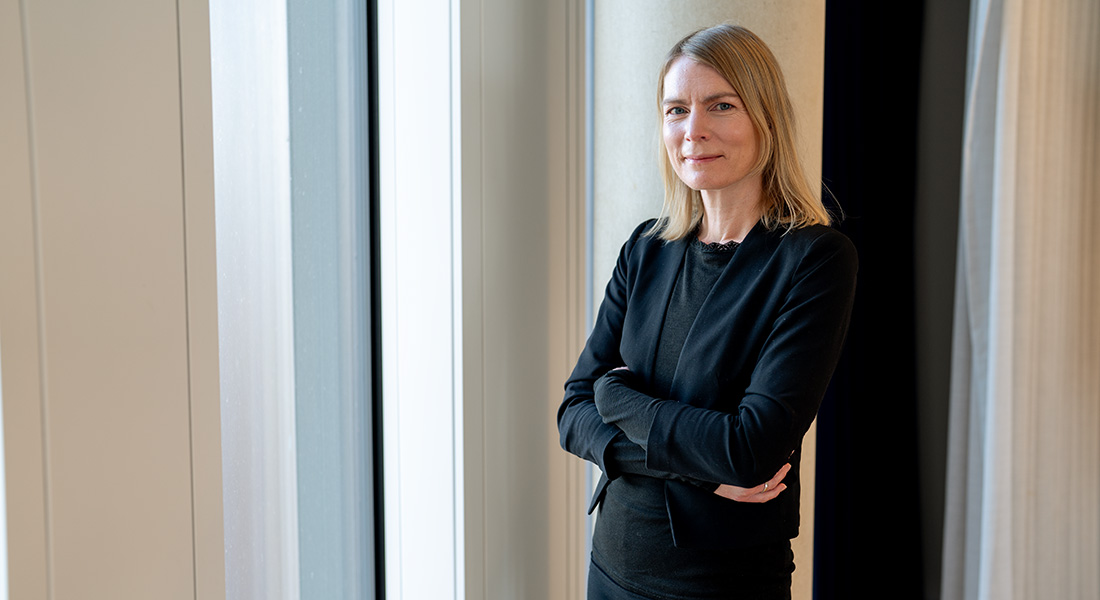
Group Leader Associate Professor Camilla Schéele will be promoted to Professor of Adipose Tissue Biology and Cardiometabolic Health as of February 1, 2026. She has been a valued Group Leader at CBMR since 2016 and has made many breakthrough discoveries into the heterogeneity of human brown adipose tissue and intercellular and interorgan crosstalk. In 2023, she assumed the position of Coordinator of Research Program 2, Metabolic Dynamics and Organ Crosstalk. With this position, she also joined Center Leadership Team where she has contributed to developing the Center strategy.
In this short interview, Camilla talks about her research career so far, why adipose tissue's signaling role may be more critical than its storage capacity, and how CBMR's collaborative environment has accelerated her discoveries.
Your group focuses on human brown adipose tissue heterogeneity, inter-cellular and inter-organ crosstalk. How did this interest arise?
It started during my PhD at Karolinska Institutet, I spent a couple of months in the labs of brown fat legends Barbara Cannon and Jan Nedergaard at Stockholm University. Almost directly after I moved to Copenhagen to start a Postdoc at the University of Copenhagen and Rigshospitalet, I was working on skeletal muscle cells – setting up a protocol for isolating stem cells from muscle biopsies and culturing them.
This was right around the time brown fat was being discovered in adult humans. Unlike white fat, which stores energy, brown fat burns energy too. There was a lot of excitement about their potential to treat diseases like obesity and diabetes. I happened to meet a clinician who had a collaboration with some cancer clinicians who were taking biopsies in the regions where brown fat might be found. She heard that I had some experience in working on brown fat before, and wanted to have me in the project.
At some point, she became busy with other projects and asked me to finish the project and serve as the PI. This was great for me, because brown fat in humans was really kicking off. In 2013, we published a characterization study of brown fat in adult humans in Cell Metabolism, which was my first really high-impact paper.
You joined CBMR as an Associate Professor and Group Leader in 2016. What were the next major steps in your research?
I still had an interest in skeletal muscle, but Professor Bente Klarlund from Rigshospitalet sat me down and said, “You have to focus on brown fat – this is your path”. She helped to setup up a research collaboration with Novo Nordisk, and we secured a big grant that supported some work with Professor Matthias Mann at the University of Copenhagen where we were testing secreted factors from brown fat cells.
It was a really intense period of my life because of my life because I was pregnant with our second child also. I just decided to dig in and work through, even during my maternity leave – I was lucky because he slept a lot, so it worked out fine! It also helped that my partner also works in science and understands the demands, so we managed to find some flexible arrangements that worked for both of us.
It took some time to get the results, but in 2019 we published two big papers, the first in Cell Metabolism with Matthias Mann where we mapped the secretomes of human brown and white adipocytes. The second in Molecular Metabolism where we identified dormant brown fat around adult kidneys.
I was also starting to get some recognition from the field and was invited the same year to talk at Keystone Symposia, which was like getting a stamp of approval from the field. Another activity that has helped is the biannual CPH BAT conference I have co-organised since 2017.
What is the untapped potential of adipose tissue in studying cardiometabolic health?
What I find most interesting is that adipose tissue is everywhere. It’s close to every organ, and has tremendous signaling potential through the many factors it secretes and receives. Its function depends strongly on where it is located. For example, subcutaneous, visceral, and brown adipose depots have distinct roles in metabolism, immunity, and energy balance. In cardiometabolic disease, these functions are not only lost but actively drive pathology. Visceral fat becomes lipid-loaded and chronically inflamed, subcutaneous fat reaches its storage limit and develops fibrosis and inflammation, and brown fat loses its thermogenic activity.
I think the problem goes beyond storage capacity and lies in the coordination of adipocyte subtypes, immune cells, and other cell types during lipid handling and tissue expansion. Disrupted tissue architecture leads to impaired signaling, causing lipids to spill into visceral fat and non-adipose organs such as liver, muscle, and pancreas.
I'm also fascinated about the link between brown fat, thermoregulation, and metabolism. This is all coordinated through interacting circuits in the hypothalamus, and I think it highlights how adipose tissue integrates environmental cues with systemic metabolic health, making it a powerful driver of cardiometabolic health when functional.
You've been at CBMR for a decade now where you've developed strong relationships with many of the other Group Leaders. What's this collaborative journey been like, and do you think it has pushed your research forward?
Absolutely, it's pushed my research forward significantly. We've grown up together, sharing the experience of being at the same level while being actively encouraged to collaborate through center grants, which has turned us into friends. We were pushed early on to develop very specific profiles, which was difficult but helped us understand each other's strengths and specializations. This created a very safe environment where you can think more creatively, take risks, and share early-stage ideas when feedback is most valuable.