CBMR International PhD and Postdoc Program
PhD and Postdoc projects starting in late 2026
The CBMR International PhD and Postdoc Program supports competitive national and international recruitment of PhD and Postdoc fellows to the Novo Nordisk Foundation Center of Basic Metabolic Research.
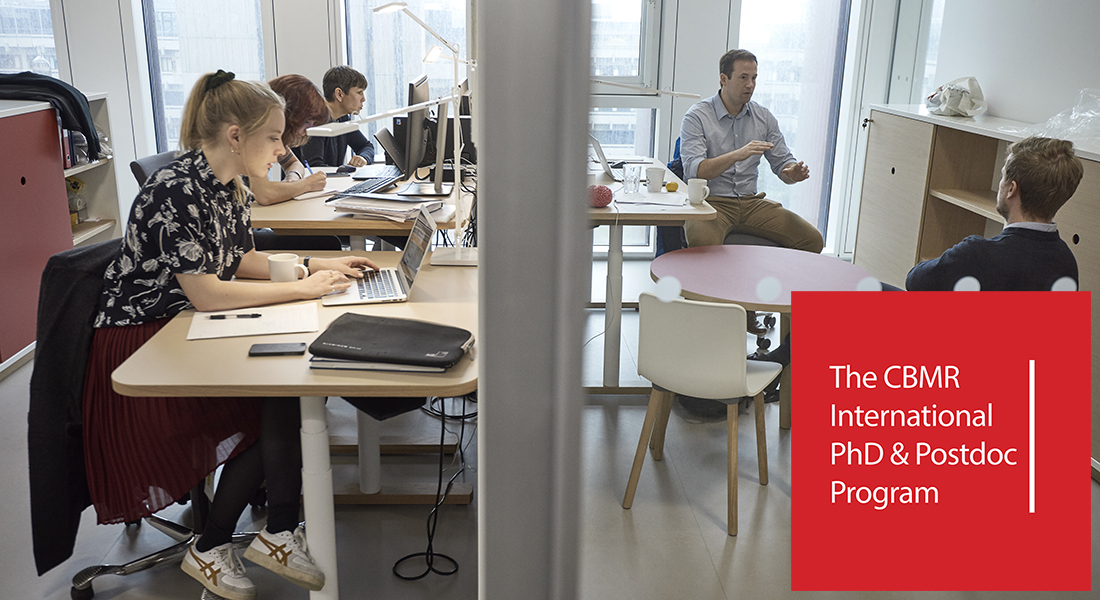
The fellowships are aimed at early career researchers with a basic science background or clinicians who aspire to a career in academic medicine. We are particularly interested in candidates who are familiar with integrative research approaches within the broad area of basic cardiometabolic research with an application towards human pathophysiology. The Center is committed to accelerate its fundamental research towards new diagnosis, prevention and treatment strategies.
Each PhD and Postdoc fellow will receive a competitive package including salary and running costs for four and three years, respectively.
The next round of applications have now opened.
The positions will start November 15, 2026.
International Staff Mobility
International Staff Mobility provides support and assistance to all international researchers on all issues related to moving to and settling in Denmark.
2027 Postdoc projects:
This postdoctoral research project investigates the therapeutic potential of Urocortin II (UCN2), a peptide hormone signaling through the CRHR2 receptor, to preserve skeletal muscle mass and function in the context of metabolic disease and pharmacological weight loss. With GLP-1 receptor agonists increasingly used for obesity management, understanding how to protect muscle during rapid weight loss has become a critical clinical priority.
The project will employ in vivo models of diabetic myopathy and diet-induced obesity, combined with comprehensive metabolic and skeletal muscle phenotyping, to evaluate UCN2 as a therapeutic target. Transcriptomic profiling and multi-omics integration will be used to uncover the molecular mechanisms underpinning UCN2's effects on muscle biology.
The candidate will join the Zierath Group at CBMR, a multidisciplinary team combining in vivo physiology, molecular biology, and bioinformatics to advance translational strategies for cardiometabolic disease. Access to CBMR's state-of-the-art enabling platforms and a collaborative network spanning Karolinska Institutet and other leading institutions will support the work.
Ultimately, this research aims to establish UCN2 as a pharmacological tool to combat muscle wasting, with direct relevance to the growing population of patients managing obesity and type 2 diabetes.
Type 2 diabetes develops gradually over many years, yet early alterations in glucose regulation remain poorly captured by current clinical tools. This project aims to identify and validate novel digital biomarkers of glucose homeostasis by leveraging high-resolution continuous glucose monitoring (CGM) data in both mice and humans. Unlike conventional measures such as fasting glucose or HbA1c, CGM provides minute-by-minute insight into glucose dynamics under real-life conditions, offering a unique opportunity to quantify how the body responds to metabolic perturbations.
We will develop analytical frameworks to extract dynamic features from CGM time-series data, capturing key physiological properties such as regulatory capacity, response kinetics, and restoration of glucose equilibrium. These biomarkers will first be characterized in extensive murine CGM datasets obtained from telemetric monitoring in freely moving animals. Their robustness and biological relevance will be assessed across diverse metabolic conditions, including diet-induced obesity and genetic models of insulin resistance.
A central objective is to establish the translational relevance of these biomarkers by applying comparable analyses to large-scale human CGM datasets from international cohorts. By aligning glucose dynamics across species, the project seeks to identify conserved physiological signatures that can bridge experimental and clinical research. Finally, human-derived biomarkers will be systematically mapped back to mouse models, enabling mechanistic investigation of clinically observed metabolic phenotypes.
Overall, this project will establish a unified framework for interpreting glucose dynamics across species, advancing a systems-level understanding of metabolic regulation and supporting earlier detection and improved stratification of metabolic disease.
The postdoctoral fellow will design and execute preclinical studies in diet‑induced obese mice to understand how next‑generation obesity therapeutics can be engineered to couple potent weight loss with active protection of lean mass and maintenance of resting energy expenditure. The project emphasizes integrative physiology, combining longitudinal metabolic phenotyping with deep molecular analyses to generate a blueprint for muscle‑preserving, energy‑expenditure‑promoting pharmacotherapies.
Key responsibilities:
- Plan and perform in vivo dosing studies in rodent models of obesity, including longitudinal assessments of body composition, energy expenditure, fuel selection and physical activity using metabolic cages and MRI.
- Conduct in vivo and ex vivo assessments of skeletal muscle function (e.g. force generation, fatigue resistance) and mitochondrial bioenergetics (high‑resolution respirometry) to define drug effects on muscle quality.
- Coordinate tissue collection and analysis across muscle, liver, adipose tissue and other organs to map signaling and proteomic pathways that underlie favorable changes in body composition and metabolism.
- Integrate physiological, signaling and omics datasets and drive manuscript preparation and presentation of findings at international meetings.
- Contribute to the daily research environment of the Gerhart‑Hines Group, including informal supervision of MSc/PhD students and active participation in group meetings and CBMR activities.
Oral infections such as dental caries and periodontitis are among the most common chronic health conditions worldwide and have been linked to cardiometabolic diseases and steatotic liver disease (SLD). However, the causal mechanisms connecting oral health and liver pathology remain poorly understood. This project aims to define the oral–liver axis by integrating host genetics, salivary microbiome profiling, proteomics, and longitudinal clinical phenotyping across early to advanced stages of SLD.
The project combines large population‑based and clinical cohorts with deep multi‑omics profiling. The successful candidate will explore the relationships between host genetics, the oral environment, salivary and circulating proteomic profiles, and liver disease phenotypes. Causal inference methods will be applied to identify shared genetic architecture and evaluate relationships between oral infections, salivary microbial composition and function, immune activation, and SLD phenotypes.
The project further focuses on longitudinal characterization of microbial and host dynamics during SLD progression and regression. Leveraging repeated saliva and blood sampling alongside serial liver biopsies, the project will map temporal changes in oral microbial communities, host–microbe interactions, and systemic immune and metabolic pathways. This approach aims to identify dynamic biomarkers in saliva that reflect liver disease activity and progression.
Overall, this project offers a unique opportunity to work at the interface of microbiome science, human genetics, and liver disease, using state‑of‑the‑art multi‑omics and causal inference approaches to uncover actionable mechanisms linking oral and hepatic health.
We are seeking a highly motivated and passionate postdoctoral researcher to join our team to identify, characterize, and validate novel molecular mechanisms and modulators of AMP-activated protein kinase (AMPK). AMPK is a conserved master regulator of cellular and whole-body energy homeostasis, and its pharmacological modulation represents a promising therapeutic strategy for metabolic diseases, including insulin resistance, type 2 diabetes, and fatty liver disease.
The goal of this position is to advance our fundamental understanding of cellular energy and metabolic regulation through AMPK signaling and to explore its therapeutic potential. The successful candidate will be embedded in a highly collaborative and interdisciplinary research environment with expertise spanning metabolic signaling, computational chemistry, in vivo physiology and pharmacology, and molecular and cellular biology.
The project will focus on identifying novel molecular mediators and metabolic regulators of AMPK signaling pathways using biochemical, multi-omics, and computational approaches, together with established genetic models and chemical tools targeting AMPK. Particular emphasis will be placed on AMPK-mediated regulation of skeletal muscle glucose metabolism, as well as hepatic glucose and lipid metabolism, using both cellular and preclinical models.
The Pers Group at the Novo Nordisk Foundation Center for Basic Metabolic Research (CBMR), University of Copenhagen, is seeking a Postdoctoral Fellow to join an ambitious project on the neural circuits that control body weight and metabolism.
We have recently identified a previously uncharacterised neuronal population in the brain that we believe plays a key role in energy homeostasis. The successful candidate will functionally interrogate this cell population using stereotactic viral delivery, in vivo fiber photometry, DREADDs, and neuroanatomical tracing in transgenic mouse models, and integrate the findings with single-cell and spatial transcriptomic data generated in the group.
We are looking for a highly motivated researcher with a PhD in neuroscience, molecular biology, machine learning, data science, or a related field, a strong publication record, and hands-on experience in rodent circuit neuroscience and central regulation of energy balance.
You will join an international, interdisciplinary team that combines human genetics, single-cell genomics, artificial intelligence and experimental circuit neuroscience, and collaborates closely with leading groups in this research field across the world.
Plasma Proteomics in Metabolic Health and Disease: This project aims to map the plasma proteome in human samples across health, obesity, insulin resistance, and type 2 diabetes to identify circulating proteins linked to metabolic dysfunction. By integrating large-scale proteomics with clinical phenotypes, we seek to discover protein signatures that reflect disease state, predict metabolic risk, and reveal new biological mechanisms. We have already prioritized a set of candidate proteins from human proteomics datasets, which will be screened and functionally validated using cell-based assays and animal models. The long-term goal is to connect human proteomic discoveries to disease mechanisms and potential therapeutic targets.
The Novo Nordisk Foundation Center for Basic Metabolic Research (CBMR), University of Copenhagen, invites applications for a two-year postdoctoral position in the Computational Chemistry Unit (CCU), with an anticipated start date of 15 November 2026 (or as agreed).
The successful candidate will develop, implement, and apply state-of-the-art computational pipelines for structure-based peptide design targeting metabolic G protein–coupled receptors (GPCRs), with an initial focus on the neuropeptide Y (NPY) and MCH receptor families. The work will leverage modern AI-based structure prediction/co-folding tools (AlphaFold-class or comparable methods), peptide modelling and design frameworks (e.g., Rosetta or equivalent), docking, and GPU-accelerated molecular simulations (including molecular dynamics) to generate, filter, and refine peptide–receptor hypotheses. Computational designs will be translated into functional ligands through close collaboration with experimental partners across CBMR, including peptide synthesis, cell-based pharmacology, and in vivo metabolic validation.
In parallel, the candidate will contribute to computational receptor deorphanization by prioritizing candidate receptors for newly discovered bioactive adipose-derived peptides (“batokines”) and supporting experimental validation.
Applicants must hold (or be close to completing) a PhD in computational chemistry, structural biology, biophysics, computer science, or a related field, with strong research output, excellent programming skills (e.g., Python), and experience working in HPC/GPU environments. Expertise in at least one of the following is expected: peptide/protein design, physics-based simulations, or AI-enabled structural modelling.
Large-scale biobanks have transformed genetic discovery for cardiometabolic disease, but phenotypic missingness remains a fundamental limitation. Many clinically and biologically informative traits, such as detailed measures of adiposity, insulin resistance, or liver health, are available only in subsets of participants due to the cost and complexity of specialised assays, imaging, or intensive phenotyping protocols. Consequently, genetic analyses often rely on crude proxy phenotypes that fail to capture meaningful heterogeneity, reducing power, interpretability, and biological insight.
This project aims to rigorously evaluate and apply scalable computational approaches that enable genetic discovery under pervasive phenotypic missingness in biobank-scale studies. The focus will be on phenotype prediction and imputation strategies that leverage deeply phenotyped subsets to enhance genetic analyses in the full cohort, while explicitly accounting for prediction uncertainty.
Using large international biobanks, the project will perform systematic, head to head evaluations of uncertainty aware methods, assessing calibration, robustness, bias, and statistical power, and will develop principled frameworks for integrating complementary approaches. In parallel, the project will explore large-scale proteomics as a cross cohort predictor layer to improve robustness when traditional clinical predictors differ across studies.
The work will also address genetic discovery under real world data complexity, including context specific genetic effects related to age, sex, adiposity, or inflammatory state. Embedded in the Kilpeläinen Group at CBMR, the project offers close mentorship, strong international collaborations, and an excellent platform to develop independent expertise at the interface of computational genomics and cardiometabolic research.
2027 PhD projects:
The proposed PhD project in the Guasch Group at CBMR aims to investigate how sustainable plant-based diets influence cardiometabolic disease (CMD) through molecular pathways captured by multi-omics profiling. Cardiovascular diseases (CVD) account for nearly one-third of global deaths, and their burden is projected to increase substantially by 2040, particularly in aging populations. Diet is a major modifiable determinant of CMD risk and simultaneously represents a critical lever for environmental sustainability. This project therefore adopts a diet–environment–disease framework, recognizing that dietary choices affect both human and planetary health.
The project aims to move beyond traditional epidemiological associations by identifying the biological mechanisms through which sustainable plant-based diets may reduce CMD risk. It combines metabolomics, proteomics, and genetic approaches with detailed dietary and clinical data from large observational cohorts and a randomized controlled trial, the PLANETDIET trial. The central hypothesis is that adherence to sustainable plant-based dietary patterns produces distinct molecular signatures related to inflammation, lipid metabolism, and glucose homeostasis, and that these signatures partly mediate the relationship between diet and CMD.
The project has three specific aims: first, to identify and validate diet-related metabolomic and proteomic signatures and assess their associations with incident type 2 diabetes, coronary heart disease, and cardiovascular disease; second, to determine whether dietary interventions induce measurable molecular changes linked to improvements in cardiometabolic risk; and third, to identify genetic determinants of diet-related proteins. Together, the project will generate new insights to support more precise and sustainable dietary prevention strategies.
The Rasmussen Lab at Novo Nordisk Foundation Center for Basic Metabolic Research (CBMR), University of Copenhagen, develops AI and bioinformatics methods for integrating large-scale biological and clinical data to better understand human disease and advance precision health. The group works at the intersection of machine learning, genomics, multi-omics, and longitudinal health data, with a particular focus on cardiometabolic disease. By combining methodological development with translational biomedical research, the lab aims to create next-generation AI systems that can model disease trajectories and support personalized prevention and treatment strategies.
A major focus of the group is the development of “medical digital twins” — AI-based computational representations of individuals built from genomics, electronic health records, health registries, and other biomedical data. The project will explore how such digital twins can be used to model disease risk and progression across large populations. In particular, the project aims to integrate longitudinal health information with family and population structure to better capture the biological and environmental factors shaping human health. The work will involve development and application of modern AI approaches on some of the world’s largest health datasets, including nationwide Danish health registries and large-scale genomic cohorts. The project is highly interdisciplinary and collaborative, involving close interactions with computational researchers, clinicians, and international partners working at the forefront of AI in medicine.
Body composition plays a central role in cardiometabolic health, yet individuals with similar overall body size can differ markedly in their underlying biology and disease risk. While large-scale genetic studies have advanced our understanding of general adiposity, much less is known about the biological determinants of skeletal muscle traits at population scale.
Recent resources such as the UK Biobank, which combine genome-wide genetic data with imaging, provide new opportunities to study skeletal muscle in relation to metabolic health, aging, and disease risk using anatomically informed measures. This project will leverage these data to develop scalable imaging-derived measures of skeletal muscle and to investigate the genetic factors that contribute to inter-individual variation.
By integrating imaging-derived phenotypes with genome-wide genetic analyses, the project aims to identify biological pathways that influence skeletal muscle traits and to explore their relevance for metabolic health and disease. Additional analyses will examine how genetic findings relate to variation in body composition and cardiometabolic outcomes.
Overall, the project seeks to improve our understanding of the biological basis of skeletal muscle variation and its role in human health, with the longer-term goal of informing more precise approaches to disease prevention and treatment.
The project focuses on understanding the causal mechanisms underlying the progression of obesity using rodent models and approaches from neuroscience, endocrinology and metabolic physiology. The work will be diverse and include rodent experiments, ex vivo analyses and bioinformatic approaches to investigate how biological systems regulating energy balance adapt during obesity development.