
Obesity may disrupt the brain’s ability to sense blood sugar
Cells in the brain can sense a rise in blood sugar, however, in mice fed a high-fat diet, that response was largely lost, or reversed. The findings by scientists at the University of Copenhagen and their international collaborators are published in Nature Communications.
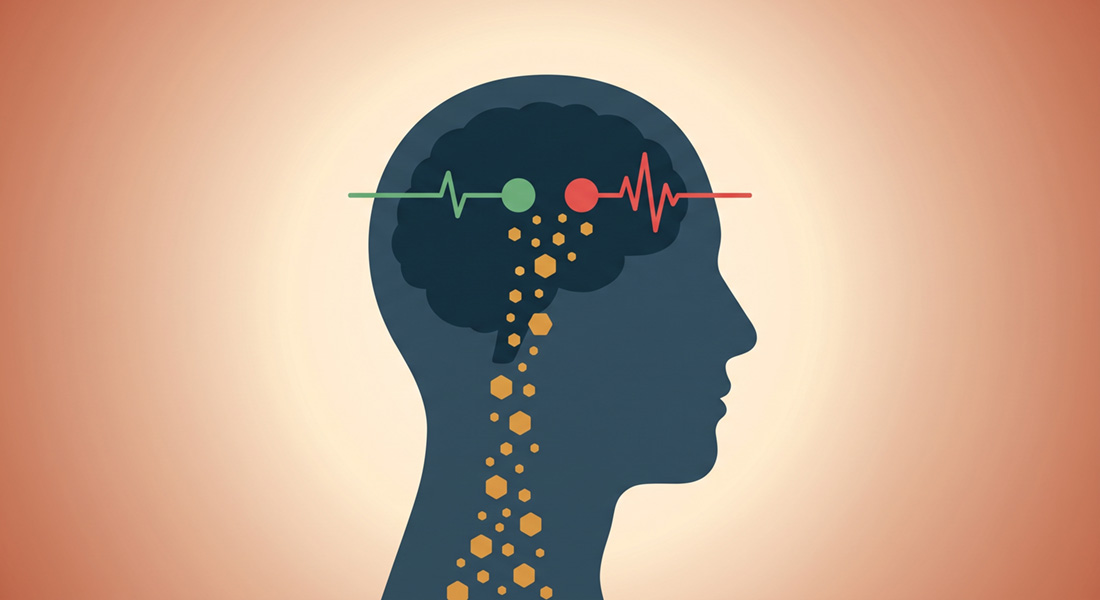
Our bodies largely run on a type of sugar called glucose, but those levels can be dangerous if they get too high or too low. Thankfully, the body has mechanisms to keep them stable. When blood sugar levels start to rise, the pancreas releases insulin, which allows muscles to take up glucose from the bloodstream. And when levels get too low, the brain mounts a powerful defence to push them back up.
But what if the brain was also involved in bringing levels down? Scientists haven’t been able to identify the brain’s role in lowering blood glucose levels, which of its many cell types would do the sensing, or what happens to that ability in obesity.
Now, scientists at the NNF Center for Basic Metabolic Research (CBMR) at the University of Copenhagen and their international collaborators have found that the brain does detect a sustained rise in blood sugar, and that a high-fat diet largely dismantles the response.
“The study shows how the brain can sense changes in blood glucose, which runs counter to the current perception that glucose is mostly regulated by peripheral tissues. If the brain is part of that regulation, then losing the ability could matter for how blood sugar control comes apart in obesity,” says Professor Tune H Pers from the Novo Nordisk Foundation Center for Basic Metabolic Research at the University of Copenhagen, and senior author of the study.
A neuron with a second job
To find out if the brain played a role in sensing and lowering high blood glucose, scientists first carried out experiments in male mice. The mice were split into two groups and fed either a control diet or a high-fat diet for eight weeks. Each group was again split into two. Half received an infusion of saline, which has no effect on blood glucose, while the other half had their blood glucose held at a high level for 30 minutes. This meant that the scientists could compare the effects of high blood glucose in the animals depending on the diet they received.
The scientists then studied the genetic activity in the mice's brains using a technique called single-nucleus RNA sequencing, which reads which genes are switched on in individual cells. In mice on a control diet, the response was clear and orderly. The brain reacted in both of the regions the scientists studied, and two populations of nerve cells in a region called the hypothalamus responded most strongly, both carrying the genetic signature of having been quieted by the rise in blood sugar.
But in mice that had spent eight weeks on a high-fat diet, that response was largely absent. In several cell types, it had not simply weakened but inverted: genes that went down in lean animals went up instead.
The strongest responders were AGRP neurons, well known for driving hunger, and neurons that produce growth hormone-releasing hormone, or GHRH, best known for controlling growth hormone release. In the control-diet mice, the gene signature showed that the rise in blood sugar turned down these neurons. But in mice on the high-fat diet, that effect was gone, and the same genes rose instead.
“We tend to think that obesity makes the body less sensitive to the signals that normally keep blood sugar under control. But in the brain, that wasn’t quite what we saw. Some cells responded to rising blood sugar in a completely different way after a high-fat diet. That suggests obesity may actually change how the brain interprets information about blood sugar,” says Assistant Professor Jenny Brown from CBMR, and first author of the study.
To find out whether this matters in people, the scientists turned to human genetics. Some of us carry small differences in our DNA that nudge our blood sugar slightly higher or lower, and large studies have already catalogued them. If a particular type of brain cell helps control blood sugar, those differences should show up in the genes that cell depends on.
The scientists ran that test across all 70 cell types in the hypothalamus at once, without picking a favourite in advance. One came back: GHRH neurons, the same cells that had responded in the mice. The finding held when they checked it against a separate map of 433,369 cells from human brains. Together, the results pointed to an unexpected group of brain cells that may help the body respond when blood sugar rises.
A map, not yet a mechanism
The scientists are explicit about the limits. The work was done in mice, and in male mice only. Neuronal activity was inferred from which genes were switched on rather than measured directly, and the authors call for methods such as in vivo calcium imaging to confirm those changes. Eight weeks on a high-fat diet is early metabolic disease rather than long-standing obesity. And whether the reversed response contributes to the failure of blood sugar control in obesity and type 2 diabetes, rather than simply accompanying it, remains an open question.
The study was a collaboration between CBMR, the University of Washington in Seattle, the University of Virginia and Novo Nordisk A/S. Tune H Pers receives research support from, and his household holds stocks in, Novo Nordisk A/S. He has received counseling fees from Zealand Pharma and Eli Lilly.
Read the paper in Nature Communications: ‘Single-cell profiling identifies obesity-disrupted brain glucose sensing’. DOI: 10.1038/s41467-026-77116-9
Contact
Professor Tune H Pers
Novo Nordisk Foundation Center for Basic Metabolic Research, University of Copenhagen
tune.pers@sund.ku.dk
Assistant Professor Jenny Brown
Novo Nordisk Foundation Center for Basic Metabolic Research, University of Copenhagen
jenny.brown@sund.ku.dk